
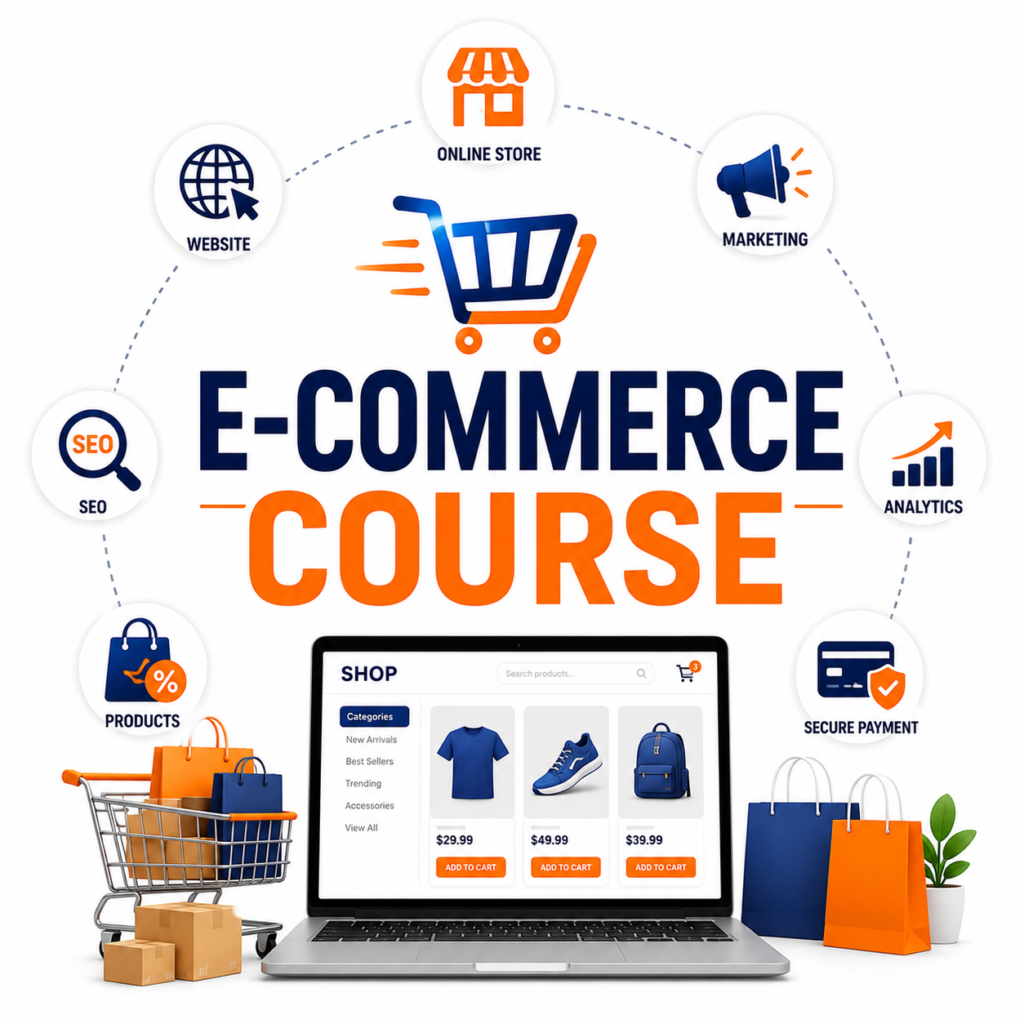
Online shopping has become a normal part of everyday life. From clothes and electronics to beauty products and groceries, people are comfortable discovering and purchasing products online. Because of this rapid growth, e-commerce has become an exciting career and business opportunity.
But starting an online store is not simply about uploading products to a website. You need to understand product selection, website management, E-Commerce Course, customer experience, payments, orders, and sales strategies. This is where an E-Commerce Course can make the learning process easier and more structured.
What Is an E-Commerce Course?
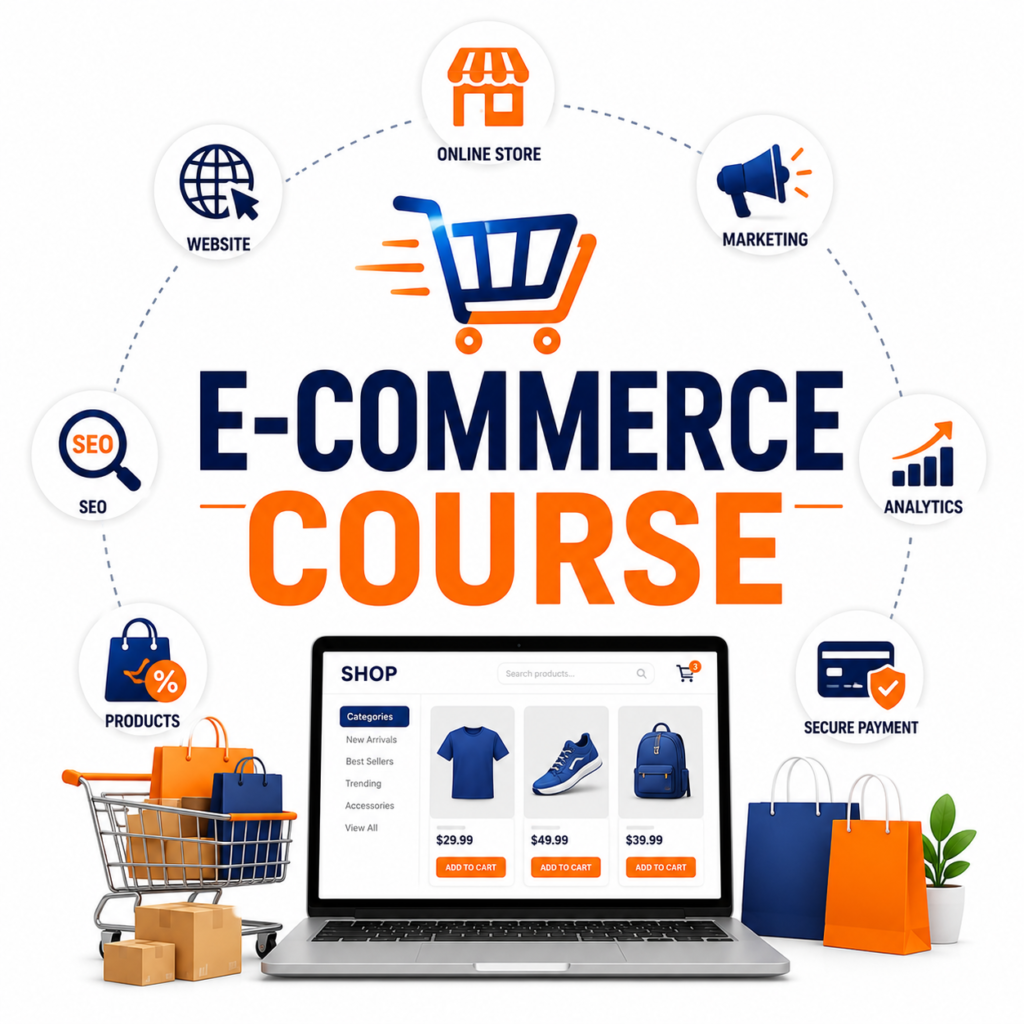
An E-Commerce Course teaches you how an online business works from the initial setup to marketing and sales. It can cover everything from creating an online store and adding products to attracting customers and analyzing business performance.
Instead of trying to learn everything randomly from different sources, a structured course gives you a clear path to understand the complete e-commerce process.
Why Learn E-Commerce Course?
The growth of online shopping has created opportunities for both businesses and professionals. Even small businesses can now reach customers beyond their local area through online platforms.
Learning E-Commerce Course can help you understand how to:
- Create and manage an online store
- Add and organize products
- Understand online customer behavior
- Promote products through digital marketing
- Generate leads and sales
- Manage online payments and orders
- Analyze store performance
- Build a long-term online business
The best part is that these skills can be useful whether you want to work for a company or launch your own online store.
What Will You Learn in an E-Commerce Course?
A comprehensive e-commerce course usually combines website development, marketing, sales, and business strategy.
Building an E-Commerce Website
Your online store is the foundation of your E-Commerce Course business. You can learn how to plan the website structure, create product pages, organize categories, and make the shopping experience simple for customers.
A professional website should not only look attractive but also make it easy for visitors to find products and complete purchases.
Product Listing and Store Management
Product presentation can have a major impact on sales. Customers want clear product images, useful descriptions, pricing information, specifications, and easy navigation.
An e-commerce course can teach you how to create effective product listings and manage products efficiently.
Search Engine Optimization for E-Commerce
Having an online store does not automatically mean customers will find it.
E-commerce SEO helps improve the visibility of product and category pages on search engines. You can learn about keyword research, product-page optimization, technical SEO, internal linking, and content strategies.
For example, someone searching for a particular product on Google may discover your store through a well-optimized product page.
Social Media Marketing
Social media is an important channel for e-commerce brands. Platforms such as Instagram and Facebook can help businesses showcase products, build communities, and drive traffic to their online stores.
Students can learn how to create content, plan campaigns, engage with audiences, and use social media as part of an overall sales strategy.
Google Ads and Paid Advertising
Organic traffic takes time to build. Paid advertising can help e-commerce businesses reach potential customers more quickly.
A good course introduces concepts such as campaign setup, keyword targeting, audience targeting, ad creatives, budgets, conversion tracking, and campaign optimization.
Meta Ads for E-Commerce
Facebook and Instagram advertising are widely used by online businesses. Meta Ads can help brands reach specific audiences based on interests, behaviors, demographics, and previous interactions.
Learning retargeting is also important because many visitors don’t purchase during their first visit. Showing relevant ads to previous visitors can encourage them to return and complete their purchase.
Payment, Orders and Customer Experience
An online business needs more than marketing. Customers expect a smooth experience from product discovery to checkout and delivery.
An e-commerce course can help learners understand the basics of:
- Online payment methods
- Shopping cart and checkout
- Order management
- Shipping and delivery
- Return and refund processes
- Customer support
A simple and trustworthy buying experience can make a big difference in customer satisfaction.
Analytics and Performance Tracking
One of the biggest advantages of online business is the amount of data available.
Analytics can help you understand where visitors are coming from, which products receive attention, how many people complete purchases, and where customers leave the buying process.
By studying this information, businesses can make better decisions instead of relying only on guesswork.
E-Commerce Course with Digital Marketing
E-commerce and digital marketing work closely together. Building a store is only the beginning. You also need a strategy to bring the right people to that store.
A strong e-commerce strategy may combine:
SEO + Social Media + Google Ads + Meta Ads + Content Marketing + Email Marketing + Analytics
When these channels work together, an online business has more opportunities to attract visitors, build trust, and generate sales.
How AI Can Help in E-Commerce
Artificial Intelligence is becoming increasingly useful for online businesses. AI tools can assist with product descriptions, content ideas, customer communication, market research, creative development, and data analysis.
However, AI should be used as a support tool rather than a complete replacement for human decision-making. Understanding your customers and developing a genuine brand identity still requires human creativity and judgment.
Who Can Join an E-Commerce Course?
An e-commerce course can be useful for different types of learners, including:
- Students who want to learn a modern business skill
- Graduates looking for career opportunities
- Entrepreneurs planning to start an online store
- Existing business owners who want to sell online
- Freelancers who want to offer e-commerce services
- Digital marketers who want to specialize in e-commerce
You don’t need to be an expert before starting. Basic computer and internet knowledge can be enough to begin learning.
Career Opportunities After E-Commerce Training
E-commerce skills can lead to several career paths. Depending on your interests and experience, you can explore roles such as:
- E-Commerce Executive
- E-Commerce Manager
- E-Commerce Website Executive
- Product Listing Executive
- E-Commerce Marketing Executive
- Performance Marketing Executive
- SEO Executive
- Social Media Executive
- E-Commerce Consultant
- Freelancer
- Online Business Owner
With practical experience, you can gradually move toward specialized or managerial roles.
Why Practical Training Matters
E-commerce is a practical field. Reading about online stores is useful, but actually creating and managing one gives you a much better understanding.
Practical training can help you work on product listings, website structure, marketing campaigns, analytics, and real-world business scenarios. These experiences can also help you build a portfolio that demonstrates what you can actually do.
How to Choose the Right E-Commerce Course
Before enrolling in a course, look beyond the certificate. Check whether the training covers both the technical and marketing sides of e-commerce.
A good course should ideally include:
- E-commerce website creation
- Product listing and management
- SEO
- Social media marketing
- Google Ads
- Meta Ads
- Analytics
- Online payment basics
- Practical projects
- AI tools and modern marketing techniques
Most importantly, look for a course that gives you opportunities to practice what you learn.
Final Thoughts
E-commerce is more than simply selling products online. It combines technology, marketing, customer psychology, creativity, and business strategy.
A well-structured E-Commerce Course can help you understand this entire ecosystem step by step. Whether your goal is to get a job, start freelancing, help businesses grow, or launch your own online store, developing practical e-commerce skills can be a valuable investment.
The online marketplace will continue to evolve, and the people who keep learning, testing new strategies, and understanding their customers will have the best chance of building successful digital businesses.